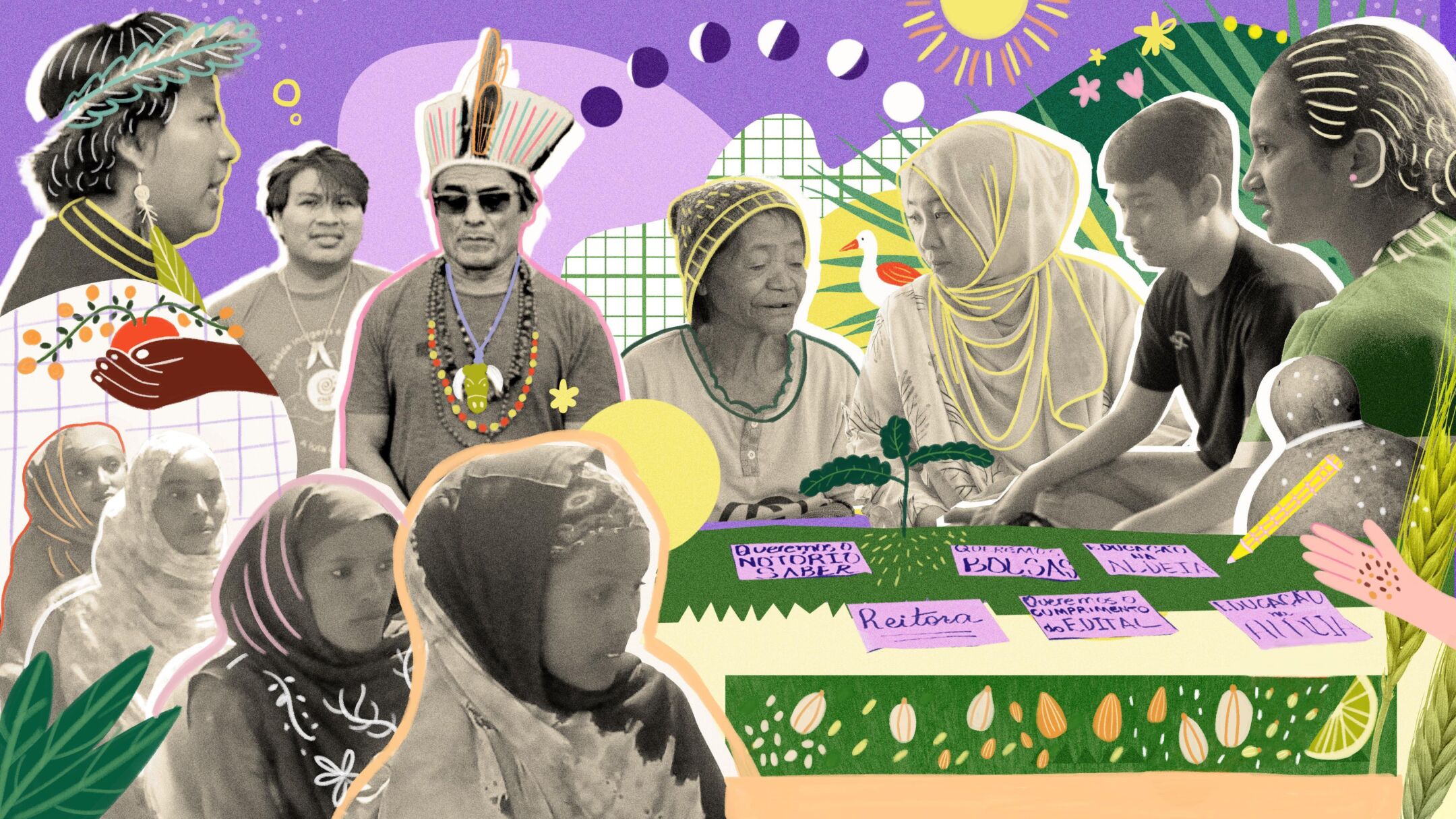
From the Amazon rainforest to the Arctic tundra, Indigenous communities have long safeguarded the land and territories they’ve inhabited, which hold 80% of the world’s remaining biodiversity. Their expert knowledge of ecosystems and sustainable practices, which have been passed down through generations, is indispensable to winning the fight against climate change, according to the United Nations (UN).
Yet, despite their outsized contributions and being disproportionately affected by the climate crisis, Indigenous Peoples’ have been largely absent in domestic and international climate policy. That is slowly changing thanks to young leaders and innovators in countries like Indonesia, Ethiopia, and Brazil, who are bringing Indigenous voices and experience to the forefront.
Extending a lifeline
The Manggarai Indigenous Peoples of Flores, a volcanic island in eastern Indonesia, have been grappling with drought and extreme weather events, which have decreased the yields of candlenuts. The community has cultivated and utilized the tree for generations – for sustenance and commercial purposes – and was struggling to make ends meet.
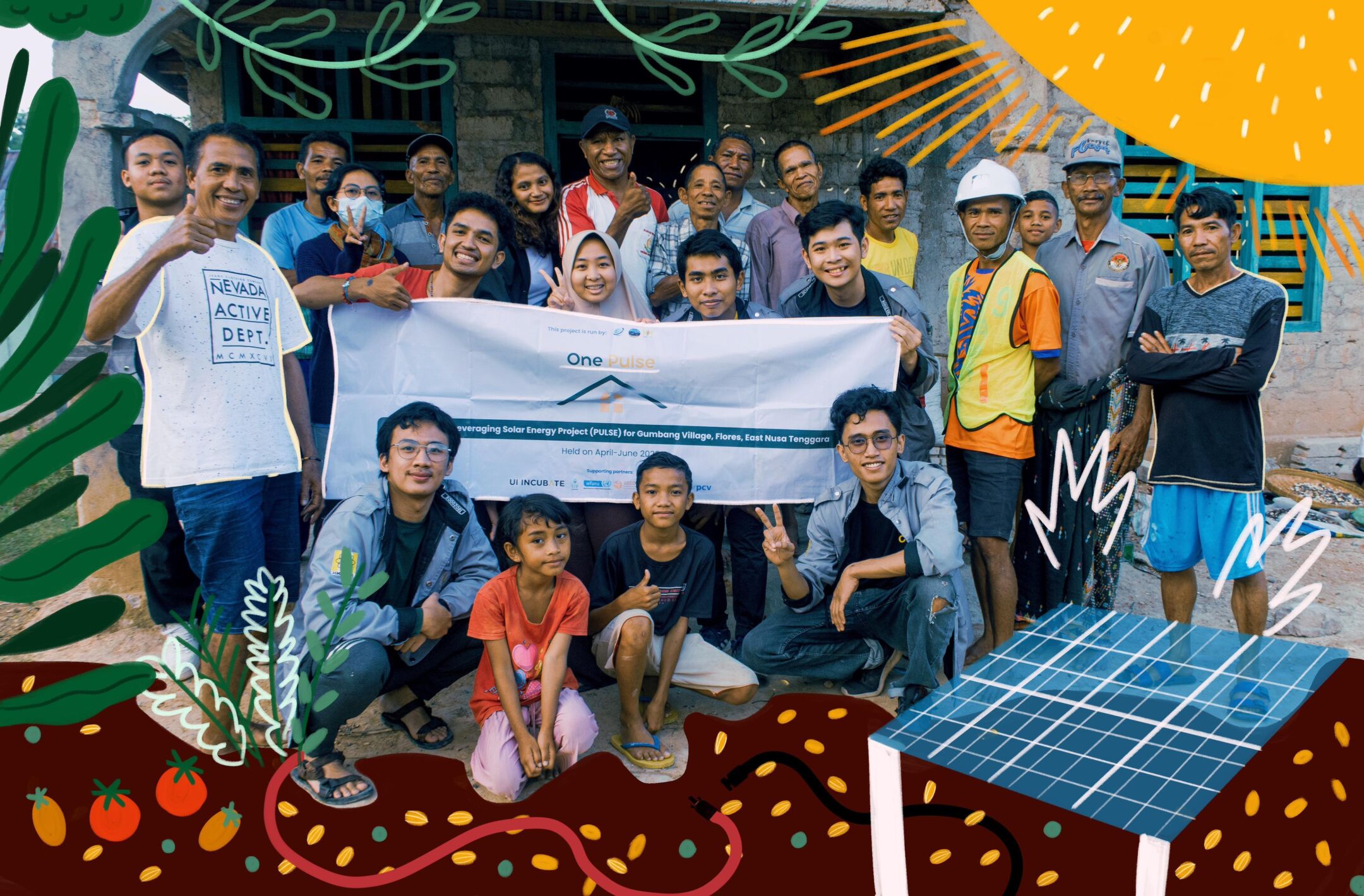
Seeking ways to adapt to the crisis's ramifications, non-profit organizer Nailah Shabirah from the One Pulse collective — a platform that brings together young changemakers, non-profits, and companies to promote solar-powered livelihood solutions in under-resourced villages across the country — collaborated with ‘Sahabat Lentera Desa’, a group of Indigenous youth from Flores.
Despite its immense solar power potential, much of rural Indonesia has no access to electricity. One Pulse is changing that by providing solar panels to farmers and rural communities, improving food security and incomes while partnering with businesses to expand their impact.
“Indigenous knowledge was indispensable to finding a meaningful solution,” says Naliah, who conducted research in the community with the help of Indigenous youth. It quickly became apparent that the farmers needed a candlenut processing machine to break even.
One Pulse joined forces with the private sector and delivered the machine alongside solar panels that power it, limiting greenhouse gas emissions and improving incomes and food security. “Usually they crack the nut with their hands but that’s taking hours. With the machine in 5 minutes you can crack 1 to 2 kg of candle nut, which fetches a much higher price once it's opened,” says Naliah.
And soon the community will gain access to solar-powered water pumps.
Empowering youth to influence policy
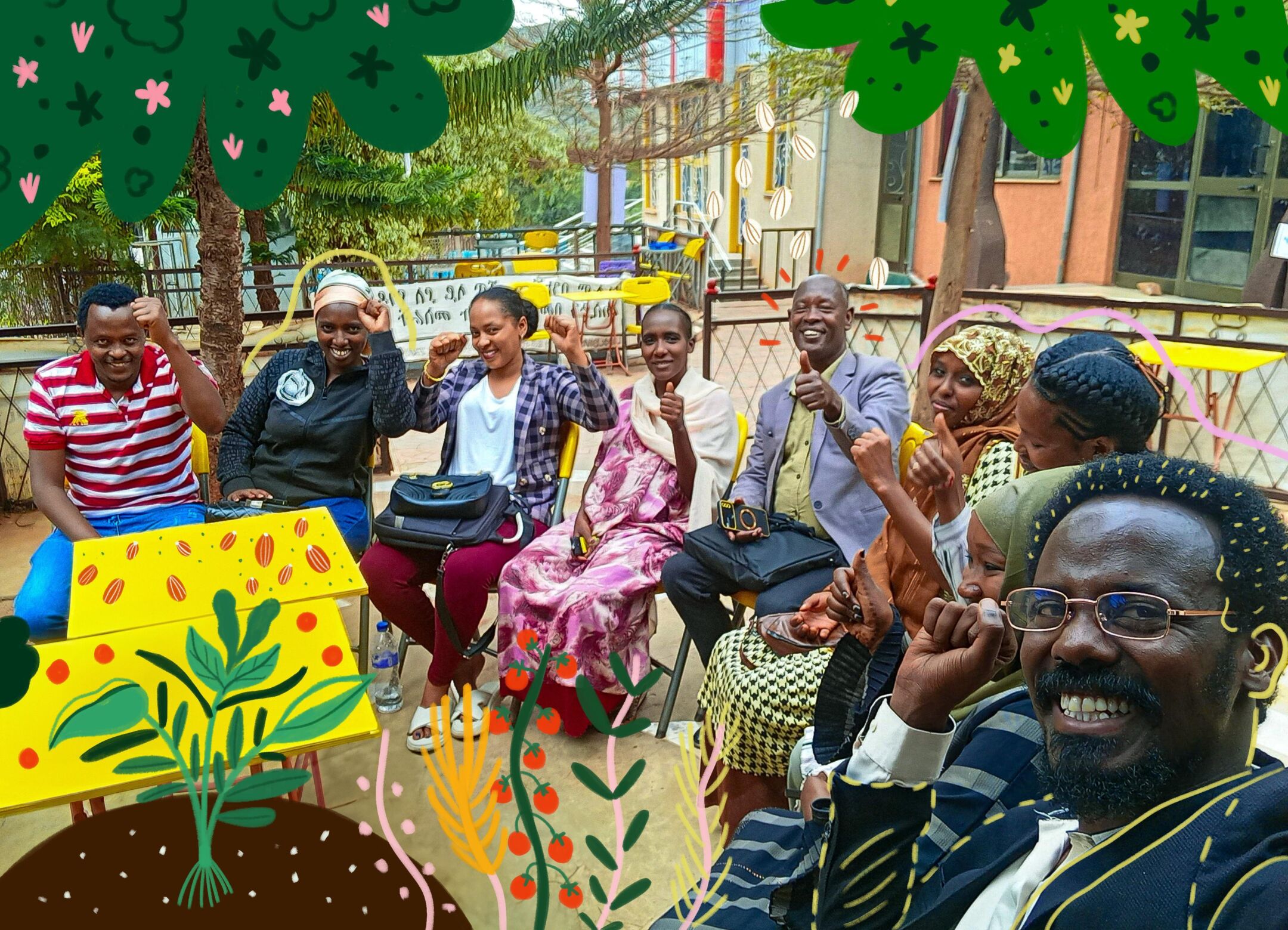
Thousands of kilometers away, in Ethiopia, the Africa Youth Pastoralist Initiative (AYPI), is also supporting farmers affected by the climate crisis by engaging with agro-pastoralist youth and promoting agricultural sustainability and food security.
The Borana pastoralist communities in southern Ethiopia have been grappling with climate change-induced droughts since late 2020. The droughts – some of the worst to hit the area in the last four decades – led to massive livestock deaths, and disrupted livelihoods, resulting in acute malnutrition among children.
To help agro-pastoralists adapt to the increasingly harsh climate, working alongside local agricultural experts, AYPI distributed seeds and provided training to over 500 youth on climate-resistant and sustainable agriculture. The training, which incorporated indigenous knowledge and practices fostered a sense of ownership and responsibility within the community, says founder Bochola Sara Arero.
“Their perspectives are overlooked because they reside outside urban centers where policymaking predominantly occurs. AYPI addresses these challenges by cultivating a sense of agency and ownership among youth through workshops, open forums, and training sessions.”
AYPI’s training has also laid the foundations for pastoralist youth to have their voices heard and participate in decision-making, despite being hundreds of kilometers away from the centers of power. “Equipping youth with resources to participate in policy making and creating pathways for their voices to influence decisions are essential steps,” Arero says.
Beyond immediate adaptation, AYPI’s work aims to build long-term resilience in these drought-prone semi-arid regions, fostering sustainable livelihoods and strengthening community-led solutions.
Going mainstream
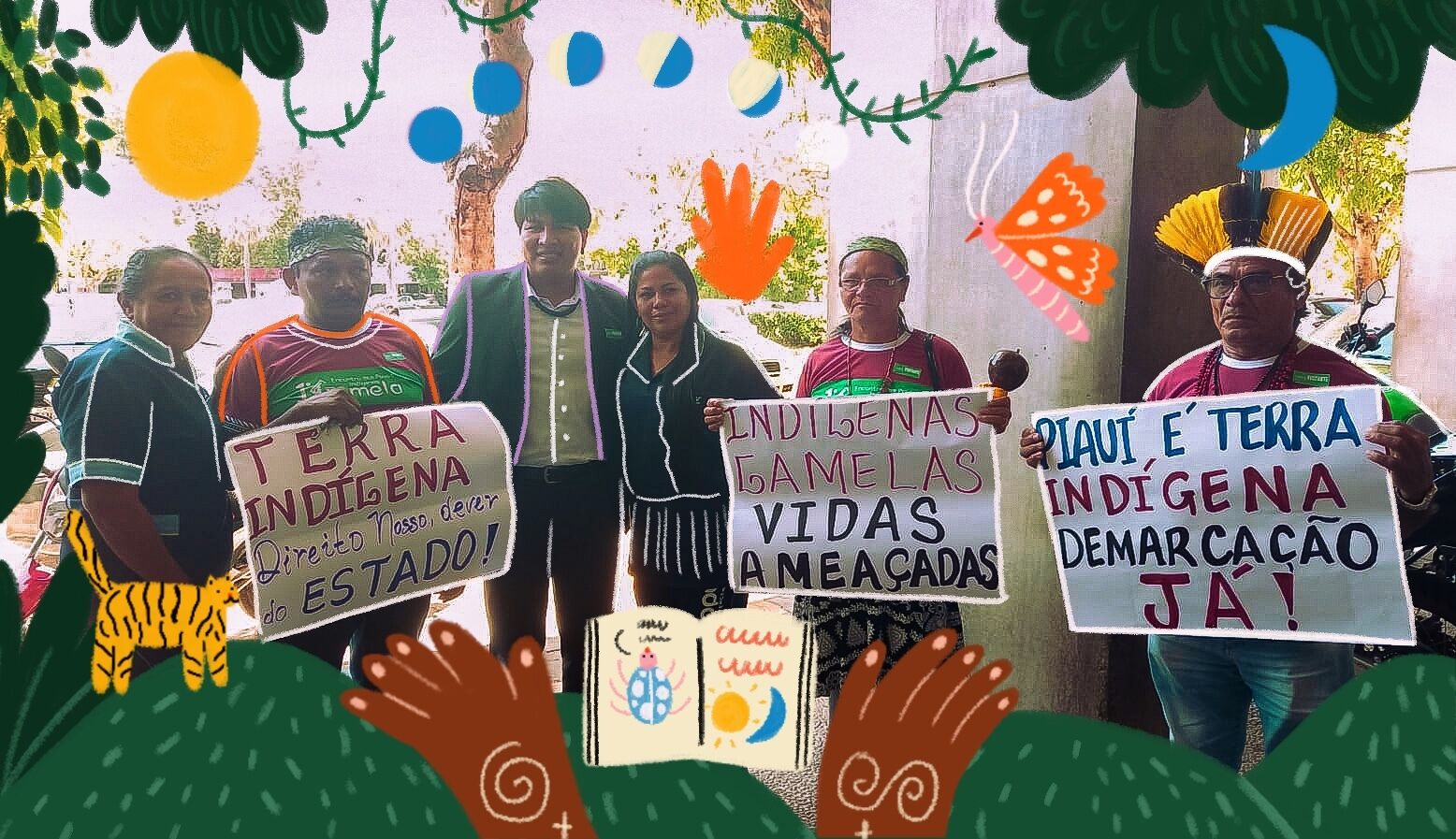
If all of these interventions in Indigenous territories were scaled up, we’d have a real chance to slow the advance of the climate crisis and strengthen resilience. For that to happen, Indigenous knowledge and practices need to reach the mainstream. That’s where the União Plurinacional dos Estudantes Indígenas (UPEI) — Plurinational Union of Indigenous Students in English — comes in, the largest network of Indigenous university students in Brazil.
Emerging from a broader movement of young Indigenous leadership, UPEI mobilizes students to preserve ancestral knowledge and defend Indigenous rights within Brazil’s primary and higher education systems.
The group’s name, explains Jesus Arantes — UPEI’s Executive Director and the first Indigenous medical student at the Federal University of Piauí (UFPI) in Teresina, in the northeastern state of Piauí — reflects the diversity of Indigenous Nations across the country, all guardians of the lands they inhabit. Indigenous territories have also been disproportionately affected by droughts and wildfires driven by climate change, worsened by deforestation that isn’t closely monitored.
But Indigenous Peoples — their perspectives and knowledge — have been excluded from universities, climate change curricula, and decision-making spaces, according to Arantes.
“Brazilian universities are based on a hegemonic model: Eurocentric science. This means universities are built around a single way of knowing.”
They seek to change this reality by advocating for the creation of Indigenous universities that integrate ancestral and traditional knowledge with science to protect Brazil’s biomes and restore Indigenous land ownership to those living on ancestral territories.
In March 2024, UPEI organized Brazil’s first international gathering on Indigenous science and climate justice, featuring broad participation from experts, traditional leaders, and Indigenous students from across the country.
“Indigenous science can be strengthened through the participation of Indigenous Peoples in building knowledge that weaves together our ways of knowing and the knowledge produced in universities. And I believe the more we do that, the more we’ll be recognized by society and be present in decision-making spaces around climate and real environmental justice,” says Arantes.
A seat at the table
Indigenous youth across continents and cultures are not only responding to the climate crisis, they are redefining what leadership and resilience look like. From Indonesia to Ethiopia to Brazil, they are weaving together ancestral wisdom with innovative solutions, advocating for justice, and reshaping the spaces where decisions are made.
These young changemakers are not waiting to be invited into climate conversations — they are creating their seats at the table, and in doing so, they are expanding the very definition of climate action. Their work highlights what should have been obvious: solutions to the climate crisis cannot succeed without the voices and knowledge of Indigenous communities. The question now is not whether Indigenous youth can lead, but whether the world is ready to follow.
Learn more about their work: