
As governments transition to greener economies aimed at reducing emissions and preventing catastrophic climate impacts—such as extreme heatwaves, flooding, and ecosystem collapse—vulnerable communities risk being left behind. Around 685 million people currently lack access to electricity, and 2.1 billion cook with polluting fuels, according to the UN.
But young people are relentlessly stepping in with innovative solutions to close these gaps. From improving access to data on mining for transition minerals in the Philippines, to delivering solar power deep to families in the Peruvian Amazon, to supporting women and girls in Burkina Faso to lead in the green economy, youth-led initiatives are paving the way for a just energy transition and equitable climate action.
Turning data into community power
The Philippines has been at the centre of the green energy revolution in Southeast Asia. Yet, although the mineral-rich island nation is a top exporter of energy transition minerals such as nickel, copper, and cobalt – essential in the production of electric cars, solar panels, and wind turbines – mining communities are often excluded from decision-making processes and see little to no benefits from the mining. But they are the ones reeling from its adverse environmental effects.
Bringing transparency and accountability to these challenges is exactly the mission of the Gov Data Initiative (GDI), a youth-led think-and-do tank that advocates for good governance through data and evidence-based analysis. The initiative was founded by three young advocates for data transparency and accountability from different sectors—government, local civil society, and international NGOs—who shared a belief that the public has a right to better understand complex governance and resource management issues. It grew out of a shared frustration over the lack of accessible, actionable government data. What began as informal conversations about transparency later evolved into a structured effort to translate technical information into practical tools and insights that communities can use.
GDI wants to make sure that the transition to a lower-carbon economy is a just one. “If we can make mining data accessible for communities, we can make companies and authorities more accountable", says Dawn. “We want to make sure that climate action and good governance go hand in hand.”
Building on this work, Dawn is adamant that companies mining so-called 'green minerals' must both compensate for environmental damage and involve affected communities in decision-making about their operations. To make this a reality, it's crucial that communities have access to information on the scale of financial flows tied to mining projects in their regions – data that has long been absent from the public domain. This critical gap has now been plugged by GDI's PREDIC Tool, an online calculator that estimates revenues from mining projects. By providing transparent mining figures, GDI's online predictor equips communities to track mining revenues and demand accountability from companies for their obligations to support public services affected by mining operations, including schools, clinics, and infrastructure. Through this work, GDI is currently monitoring 4,538 hectares of mining sites in Palawan and a further 3,228 hectares in Cebu.
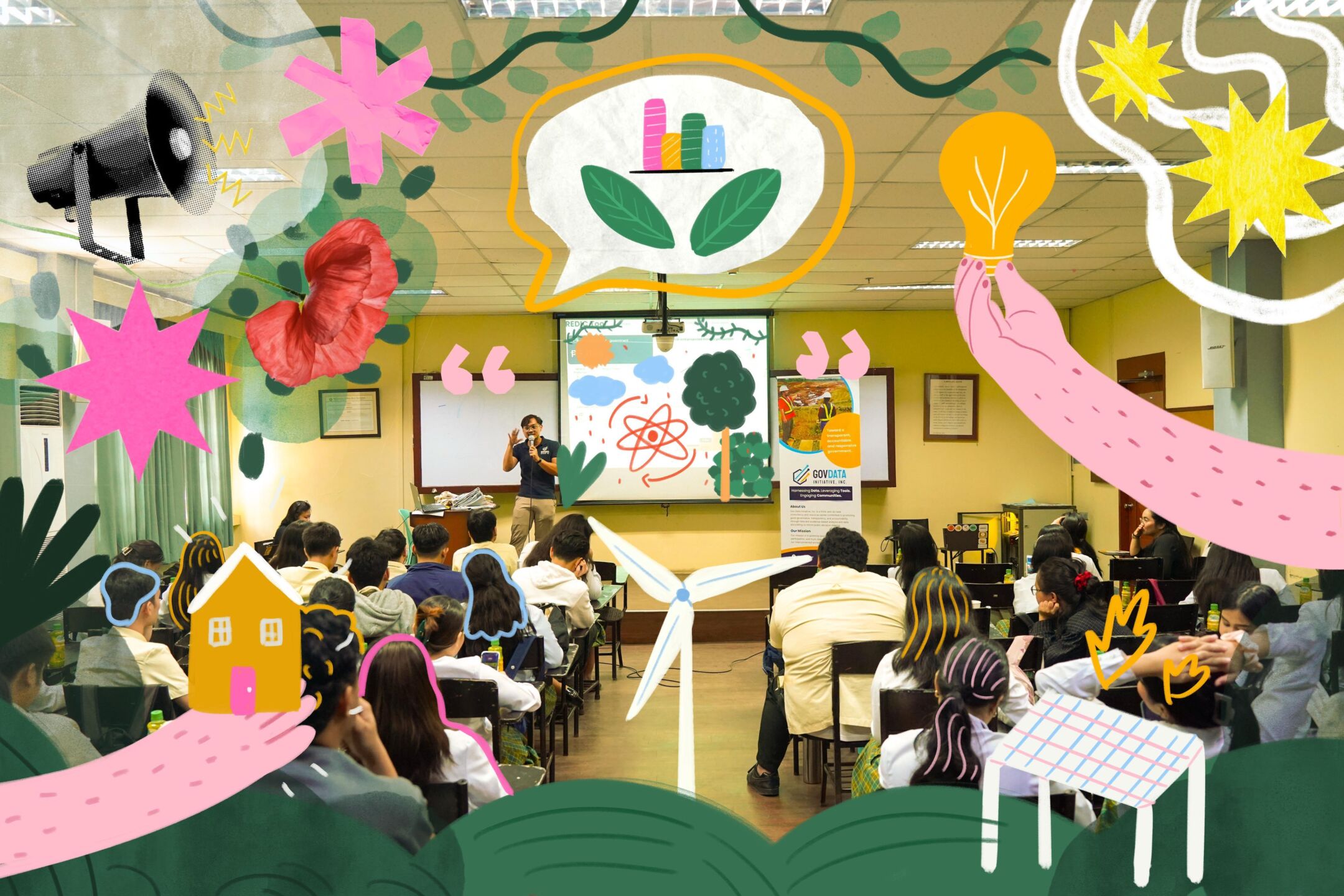
Ensuring communities can use this data meaningfully is central to GDI's approach. To that end, the organization works with young people in extractive-affected areas, providing training on how to use its online tools and advocate for a just transition across the Cebu and Palawan provinces. In 2024, GDI trained more than 160 young people (majority of them women) and supported over 20 new dataquest entries documenting mining sites in their own communities.
GDI not only equips young people to take action locally, but also positions them to influence broader decisions around mining and a just transition in their provinces. “Communities have the power to understand the data, ask questions to be able to participate in public discussions, trace where the money is going, if it’s really going to the communities it is supposed to benefit,” Dawn says. Through this training, local youth are now equipped to support community leaders in demanding corporate accountability and driving public dialogue in mining-affected areas.
Energy that transforms
For Brazil-based Vitor Rissatti, his journey with renewable energy began when the global COVID-19 pandemic hit in 2020. Like many university students, he had to stay home and attend classes online. But he realised that his friend Roxana, living in the depths of the Peruvian Amazon, couldn’t keep up with her classmates because there was no electricity.
According to the United Nations Development Program, energy poverty in Peru remains a critical barrier to development and climate resilience, especially for Indigenous communities living in remote regions far from the capital and major cities.
“Our group of friends decided to do something so that Roxana and other children in her village can access online classes, like everybody else”, says Vitor. That’s how Aylluq Q 'anchaynin – which means “community energy” in the native Quechua language – was born.
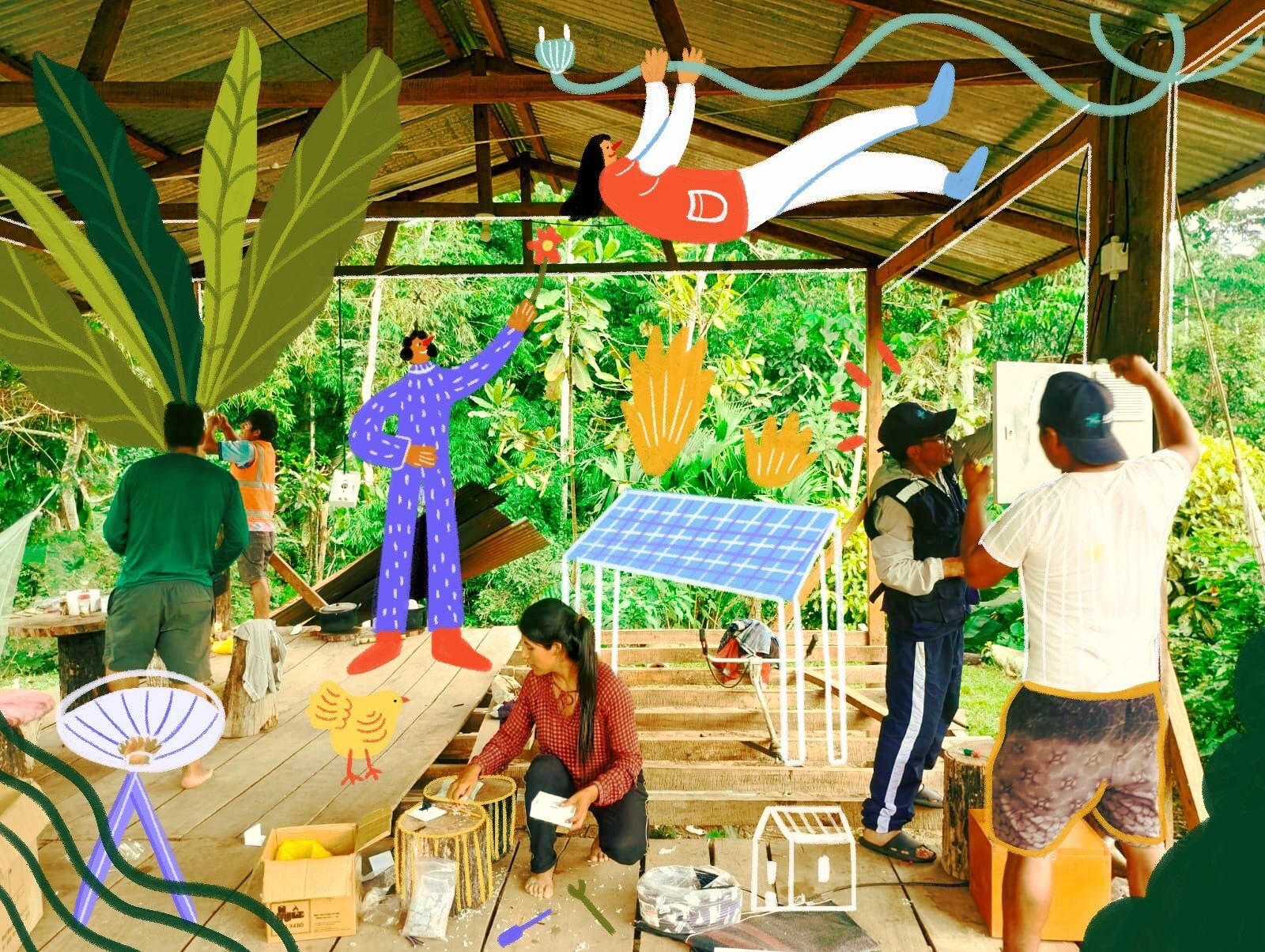
The project, run by Vitor, Roxana, Joyce, Osman, Icoana and Yanderi, all members of the Latin American Observatory of Energy Geopolitics (OLAGE), manages and provides electricity from solar energy to 40 families in the Peruvian Amazon. Each household system consists of one 370 Wp panel, enough to cover essential household electricity needs, while the community school’s system uses three panels totaling 1.1 kWp, enough to power classroom devices and support school activities.
Ever since the group installed solar panels in Roxana’s village, Alto Mishagua, the community has been able to connect more reliably to information and resources. It changed people’s daily lives and opportunities. Children and young people can now pursue their education more consistently, accessing online classes and learning opportunities that were previously out of reach.
Before Aylluq Q 'anchaynin, a teacher had to travel for hours to reach the village, staying only briefly before returning home. Now, with electricity and reliable connections, students can study daily, and participate in learning in a way that suits their own needs. “We always work with the community, and they’ve been part of the decision-making,” Vitor says. “We don’t want to change their way of life, but we wanted to help improve it by giving them what they needed – electricity.” By training 12 residents to operate, maintain, and repair the solar panels, and focusing on involving women and young people, the project can now grow and continue to be sustainable.
Now strengthened by their first concrete project, Aylluq Q’anchaynin, the group is also working with other Latin American youth organizations to structure a larger energy-focused initiative that combines education, advocacy, and practical action.
Women at the forefront
Meanwhile, in Burkina Faso, West Africa, Jessica Renelde, just like Dawn and Vitor, also had a defining moment while studying electrical engineering at university. When she arrived, there were 45 students in her class — only three of them girls. In the classes before hers, there hadn’t been a single one. She quickly realized that very few young women pursued electrical technologies, a field still widely seen as male-dominated.
Her awareness of energy access issues deepened during an internship outside the capital city of Ouagadougou, where she observed that many households were not connected to the national electricity grid. Officially, only 5% of rural households in the country have electricity. “But it is women who most acutely experience the negative effects of energy poverty,” says Jessica.
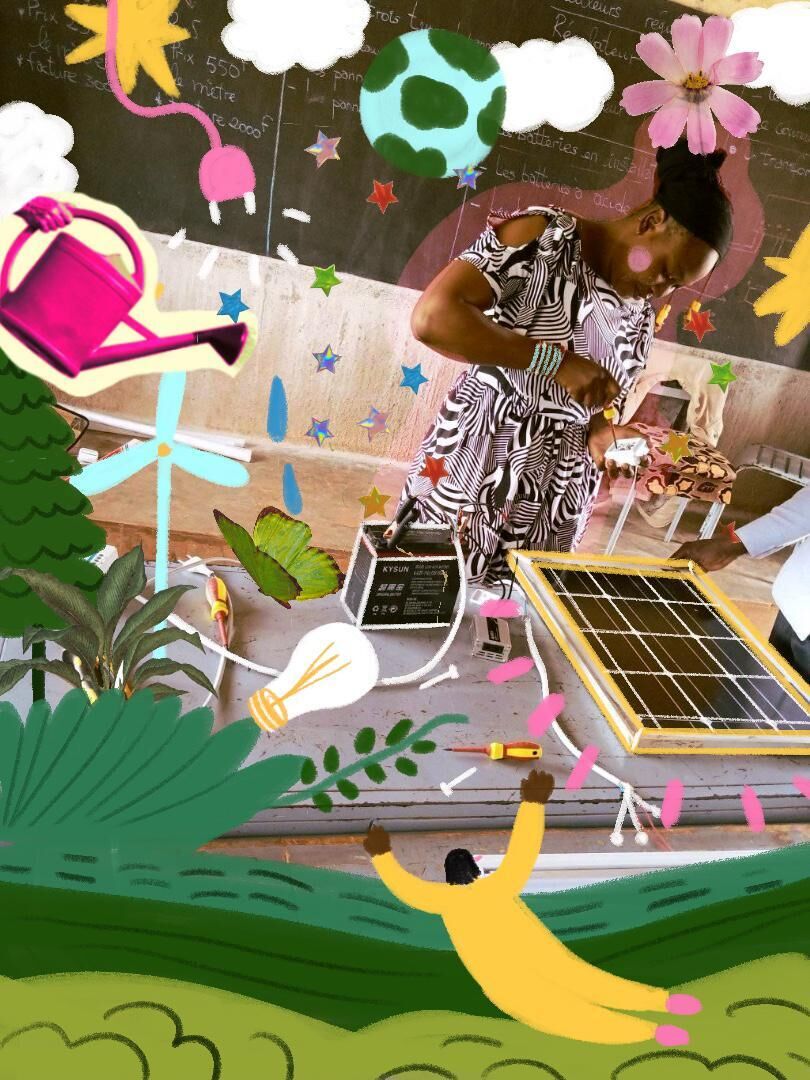
In 2021, she founded Girls Energy Ambassadors, an initiative that trains young people in renewable energy while helping them implement community-based solutions. The organization runs programs in schools and communities, equipping participants with skills to design projects that improve local energy access and reduce the burden of energy poverty.
It also implements community-based green energy access projects with a strong gender focus. One of its flagship initiatives is the Pitch Challenge, which trains young girls on renewable energy, climate, and gender issues, while enabling them to design and implement their own community initiatives. For example, the 2025 edition focused on biodigesters, which provide access to clean cooking energy. Biodigesters help reduce deforestation, lower women’s physical burden, and limit exposure to toxic smoke that affects both women’s health and the environment. The theme was chosen because, for families, this solution means less deforestation, cleaner air at home, and fewer hours spent collecting firewood — a responsibility that falls overwhelmingly on women and girls.
Through these programs, girls and young people gain the skills and confidence to implement solutions that directly improve their communities — from providing clean cooking energy to reducing deforestation and improving household health. “This is why women need to be at the centre of the green energy revolution,” Jessica says. “They understand how to solve the critical problems that affect them.”
Today, Girls Energy Ambassadors has trained hundreds of young people and supported dozens of households in adopting clean energy solutions, transforming communities by reducing energy burdens and fostering sustainable development.
Young leaders shaping a just energy future
Together, Gov Data Initiative, Aylluq Q’anchaynin, and Girls Energy Ambassadors show that the global energy transition can be just when it’s shaped by local knowledge, gender equity, and community leadership. Their efforts illuminate a shared vision: a renewable future where communities have agency in decision-making, opportunity, and self-determination. These youth-led solutions remind us that a just and sustainable transition is already within reach.
Learn more about their work:
🪷 Gov Data Initiative
🪷 Aylluq Q’anchaynin
🪷 Girls Energy Ambassadors